#55 | A Comprehensive Guide to Staking on Nibiru
· 3 min read
Table of Contents
- What is staking?
- What are validators?
- What to consider when choosing a validator?
- How do you stake NIBI?
- How do I unstake or redelegate NIBI?
- Future Roadmap
- Relevant Questions
It's been a month since Nibiru launched its mainnet. Now that validator inflation is activated, users can earn rewards for validating Nibiru. This article will explain staking, guide you through using the Nibiru Web App for staking, detail what to expect when delegating NIBI to validators, and discuss how you can contribute to the Nibiru ecosystem.
What is staking?
Staking involves locking up tokens for Proof of Stake (PoS). Participants can delegate their NIBI tokens to validators to validate transactions, enhancing network security and decentralization. By doing this, users can earn emissions or staking rewards in NIBI.
What are validators?
Validators are pivotal in maintaining the integrity and security of Nibiru. Validators are responsible for creating new blocks and verifying transactions. Validators manage nodes that actively participate in the consensus process, ensuring that all transactions are valid and consistent throughout the network.
When a participant stakes NIBI, they delegate it to the validators of their choice. The delegated tokens give validators more weight in the network's decision-making process. The more tokens staked with a validator, the higher the chance of that validator being chosen to create a new block, which in turn earns transaction fees and block rewards. These rewards are then shared with those who staked their tokens, providing an incentive for both validators to act honestly and for stakers to identify and stake with reliable validators.
What to consider when choosing a validator?
When staking to a validator, it's important to do your research to find the right fit. Each validator brings unique perks and value to the network. For instance, some validators offer block explorer services, while others might offer different advantages. In other words, it's not necessary to stake with the top 10 validators who have the highest voting power in order to earn rewards. In fact, to ensure that the network remains decentralized, it's encouraged to keep the voting power of Nibiru’s validator below 33%.
How do you stake NIBI?
- Visit the Nibiru Web App
- Click “Connect Wallet” and use Leap or Keplr.
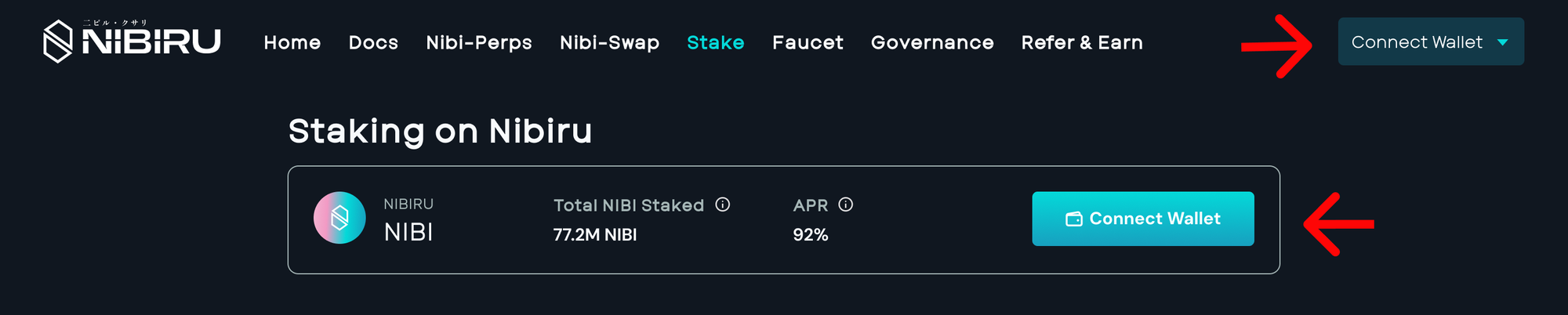
3. Choose a validator to stake with. While you don't have to pick Nibiru's validator, there are many validators available for delegation.
4. Insert the amount of NIBI to stake
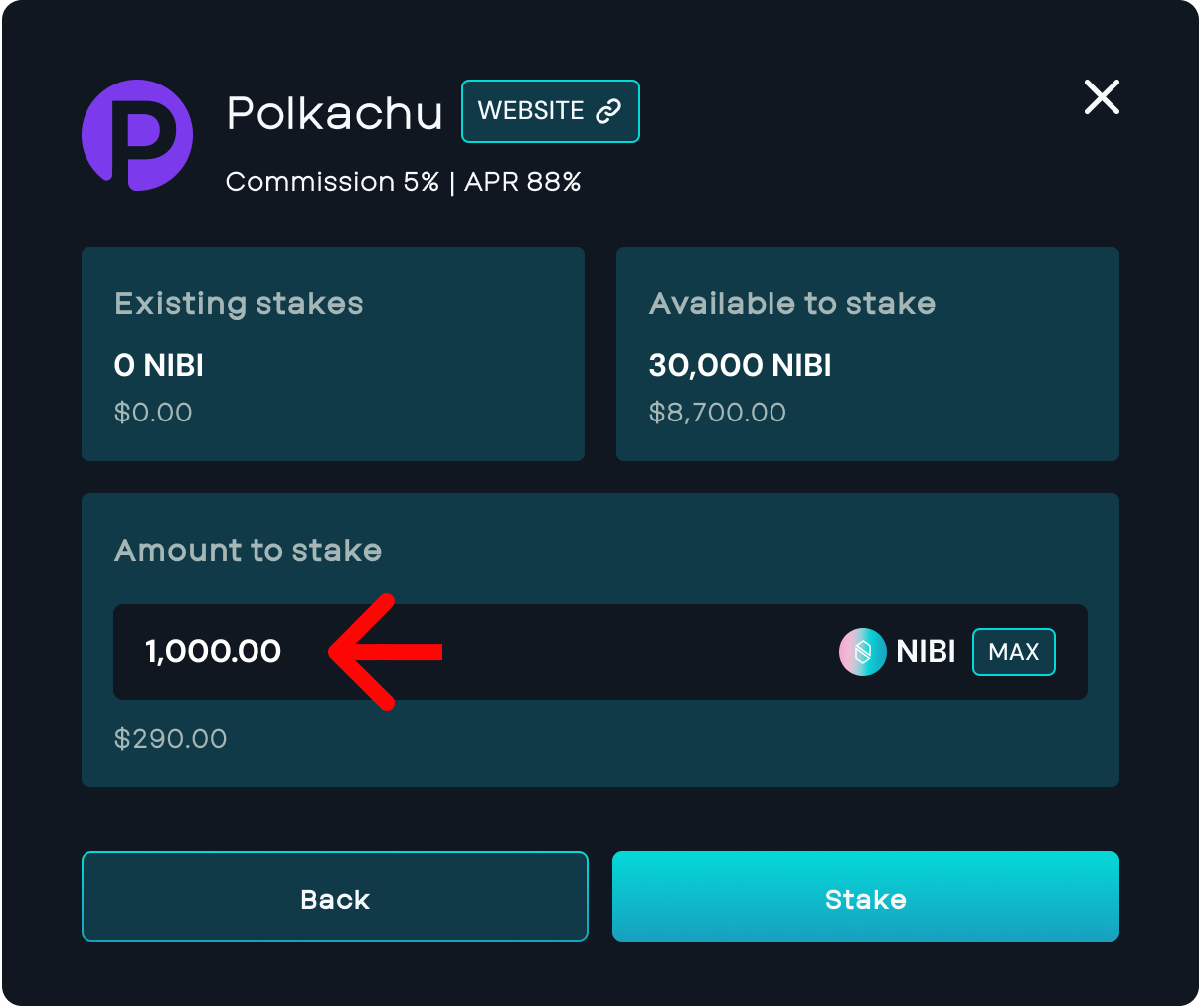
5. Click “Stake”
6. Next, “Approve” the transaction
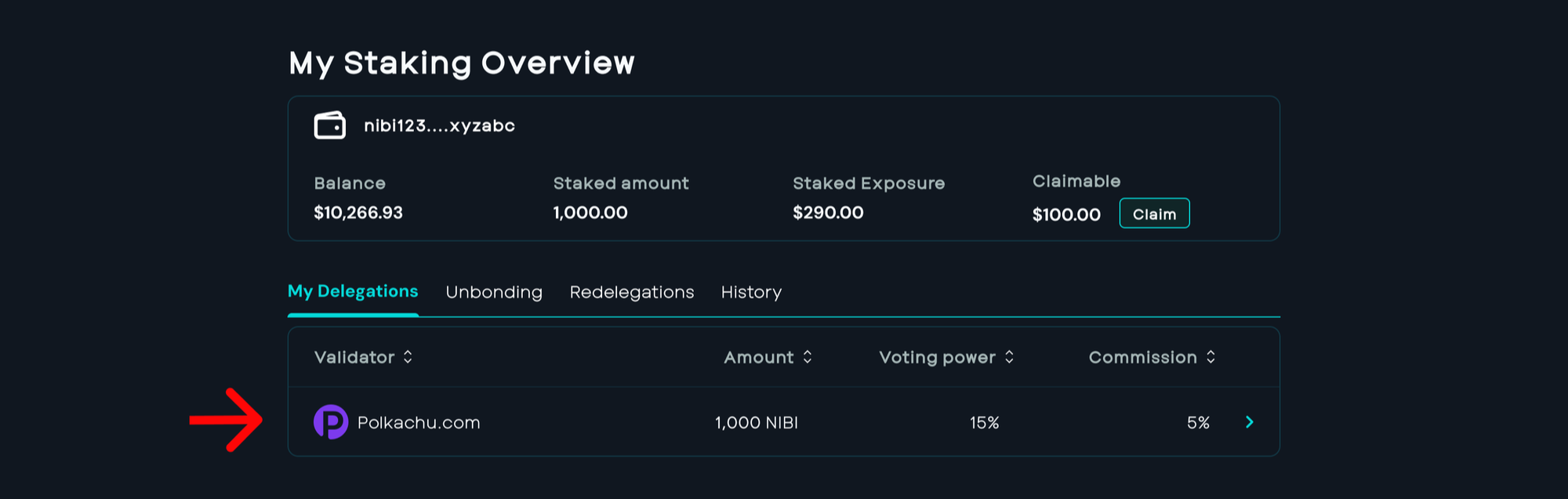
7. You will now see the validators you've staked NIBI to.
How do I unstake or redelegate NIBI?
- Under “My Delegations,” select the Validator you want to unstake from.
- You’ll see the option to either “Unstake” or “Redelegate” your NIBI.
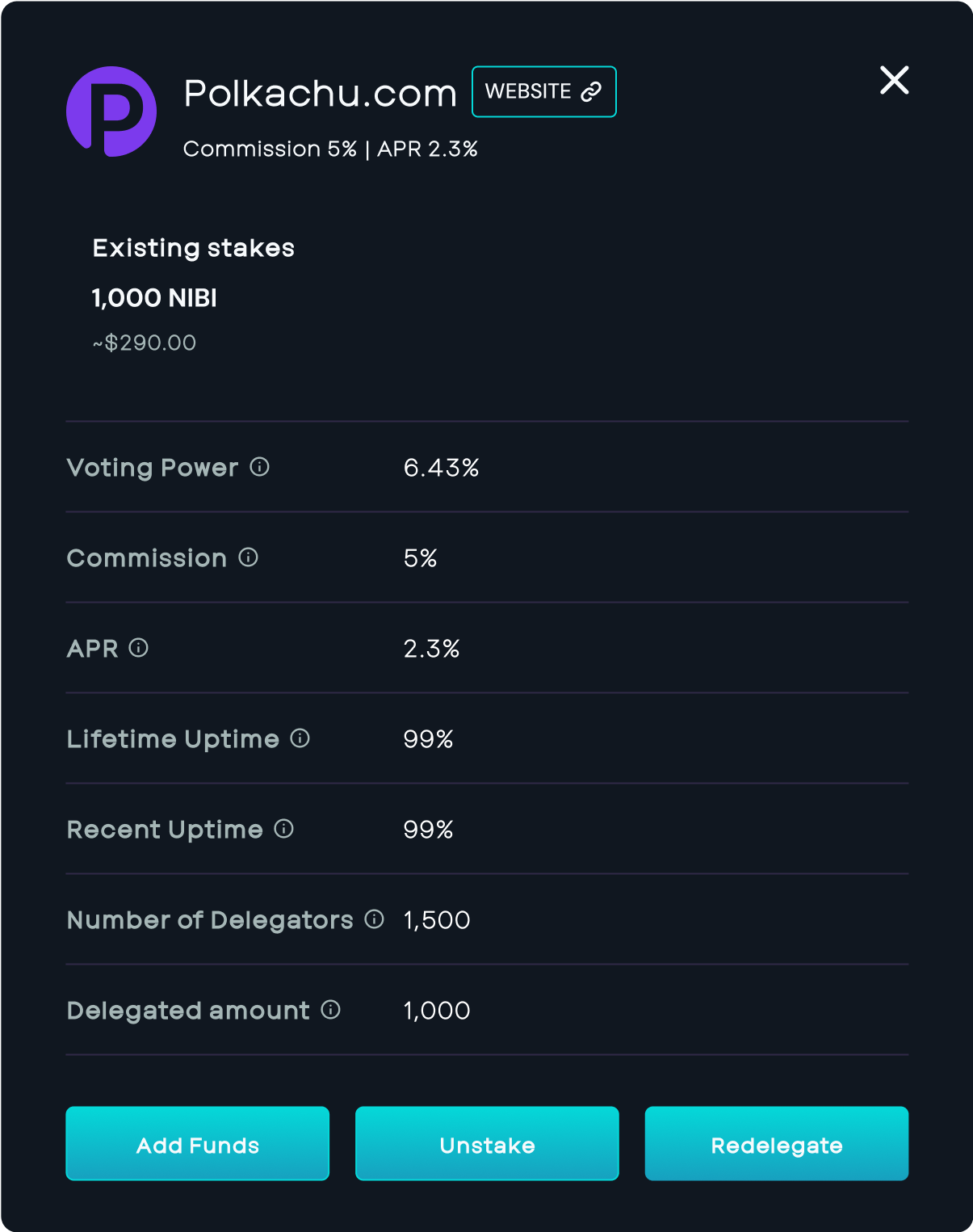
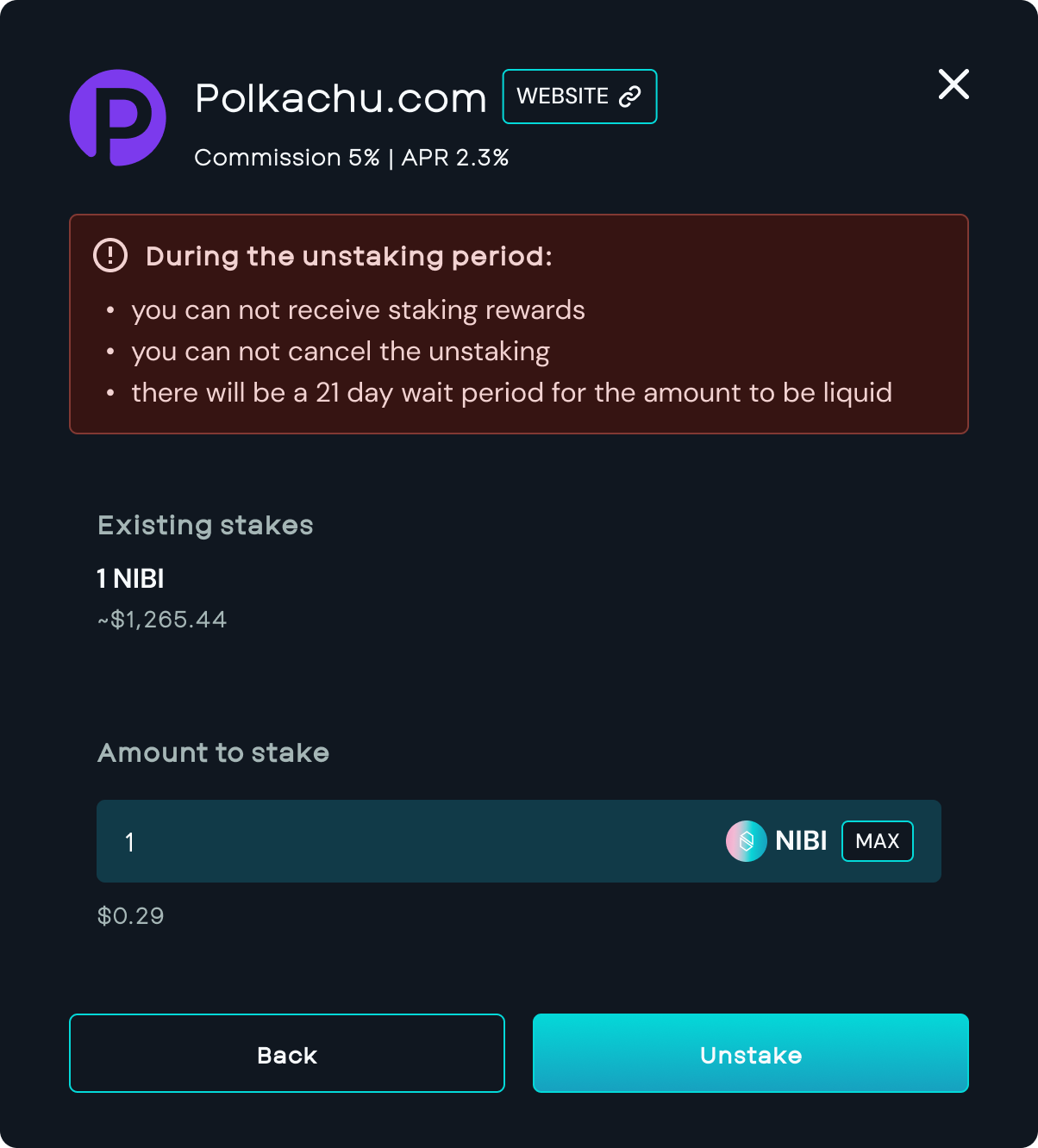
3. If you “Unstake” NIBI, the unbonding process will take 21 days.
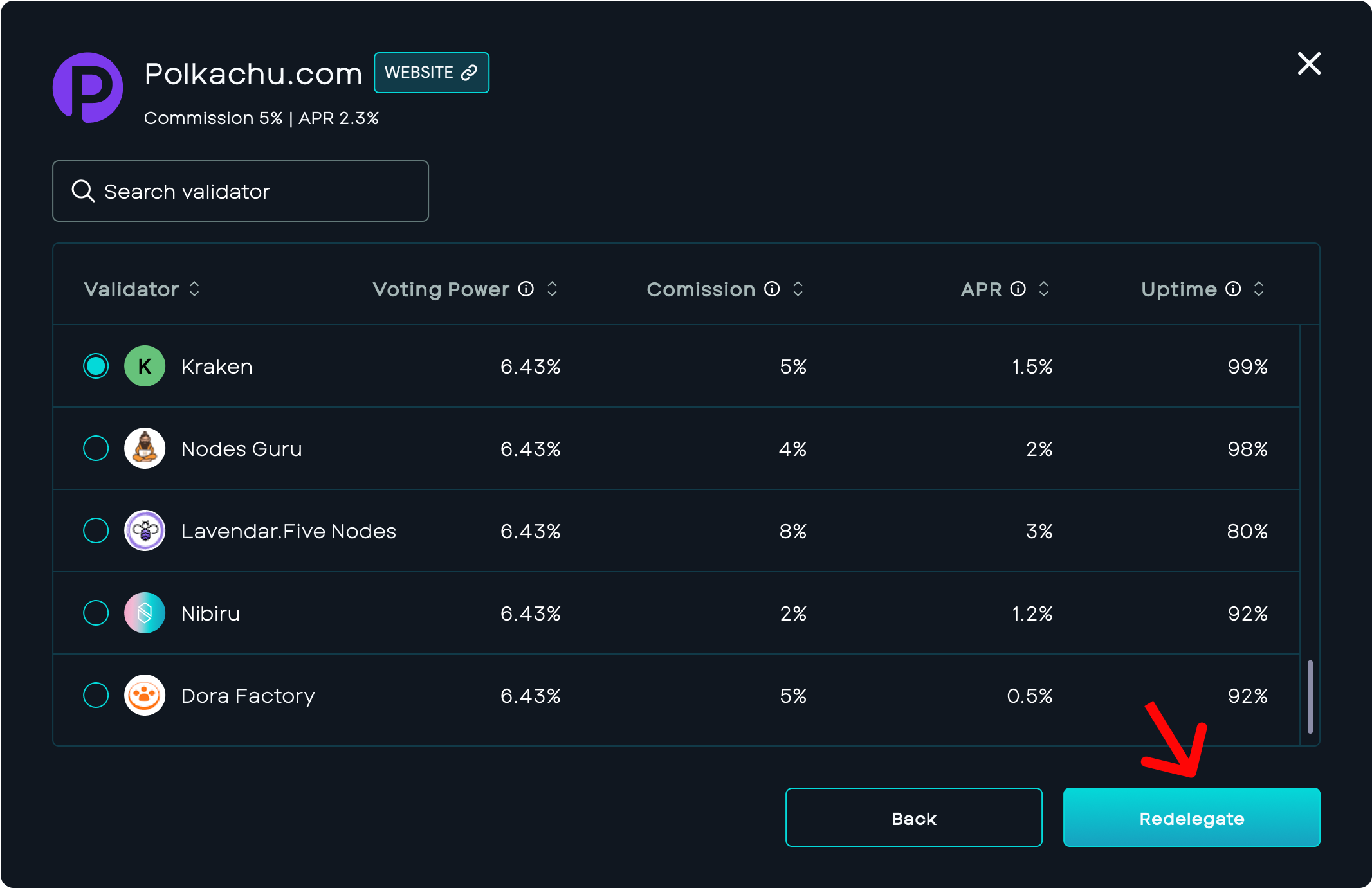
However, if you choose to “Redelegate” NIBI, you can stake it with another validator.
4. After 21 days of initiating the unstake, the NIBI will automatically return to the address.
Future Roadmap
Soon, users will have the ability to participate in Liquid Staking. Liquid staking opens up the doors for many new possibilities:
- Staking tokens across different DeFi protocols, allows users to explore new investment opportunities while still earning passive income from staking.
- Liquid Staking improves the scalability of blockchain networks by allowing more efficient use of capital. This aspect is crucial for the sustained growth and adoption of blockchain tech across different sectors.
Relevant Questions
- How often do users receive staking emissions?Stakers receive emissions from the network accrued over the day (once per 24 hours), and the rate of emissions adjusts every 30 days.
- How often do users get regular rewards?Rewards are distributed daily.
- Do users need to claim staking rewards manually or are they claimed automatically?Users must manually claim their staking rewards through the Nibiru Web App UI.
- Are coins frozen when a user stakes them?Staked tokens become non-transferable and illiquid.
- Is there an unstaking period?Yes, there is a 21-day period for unstaking also known as unbonding. However, the unbonding process can be canceled at any time.
- Can users re-delegate from one validator to another?Users can re-delegate from one validator to another. The first re-delegation occurs immediately, but subsequent re-delegations (from the 2nd to the 3rd delegator) require a 21-day waiting period.
About Nibiru
Nibiru is a breakthrough L1 blockchain and smart contract ecosystem sporting superior throughput and unparalleled security. Nibiru aims to be the most developer-friendly and user-friendly smart contract ecosystem, leading the charge toward mainstream Web3 adoption by innovating at each layer of the stack: dApp development, infra, consensus, a comprehensive dev toolkit, and value accrual.