#69 | Unlocking TVL and Revenue Through Structured Products
· 4 min read
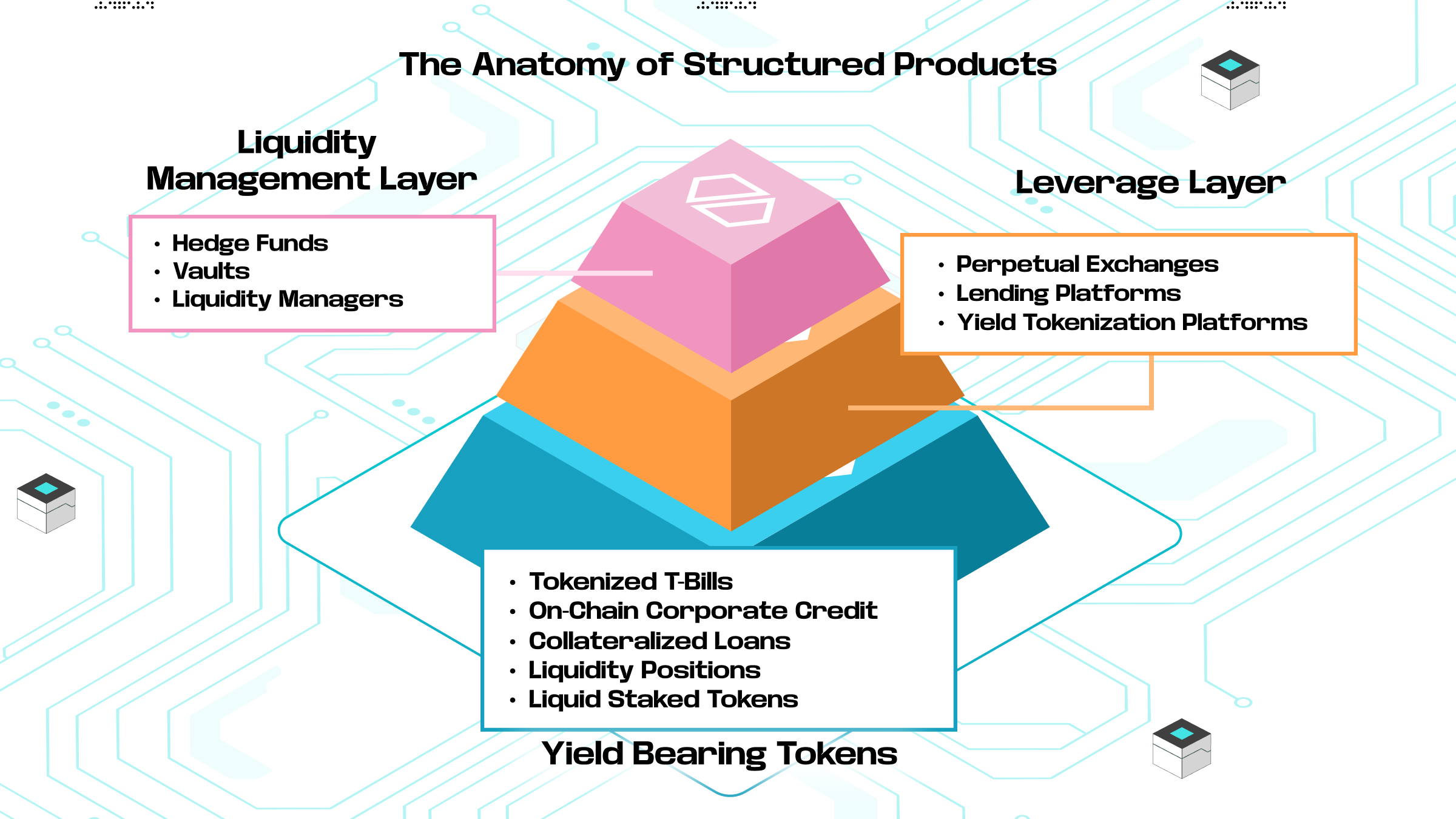
Structured products, like tokenized T-bills and other yield-bearing tokens, power DeFi ecosystems and drive sustainable growth by creating organic revenue streams that flow back to applications.
In the world of DeFi, success is often measured by two key metrics: Total Value Locked (TVL) and protocol revenue. These metrics are considered to reflect the health and growth of a Web3 ecosystem. But how are they achieved, and how can they be maximized for long-term success?
In this article, we explore the role of structured products—such as tokenized T-bills, vaults, yield-bearing tokens—and how they fuel sustainable growth in DeFi. Structured products are a powerful means to facilitate interconnected layers and maximize key performance indicators like TVL and protocol revenue. They connect everything from Perp DEXs and Leverage Protocols to Principal Tokens/Yield Tokens (PT/YT) Platforms, Lending apps, and liquidity managers, all while creating organic revenue streams.
Let’s break down how these layers work together, building on each other to create a flywheel effect that drives real value and growth in DeFi ecosystems.
Yield-Bearing and Value Accrual Tokens
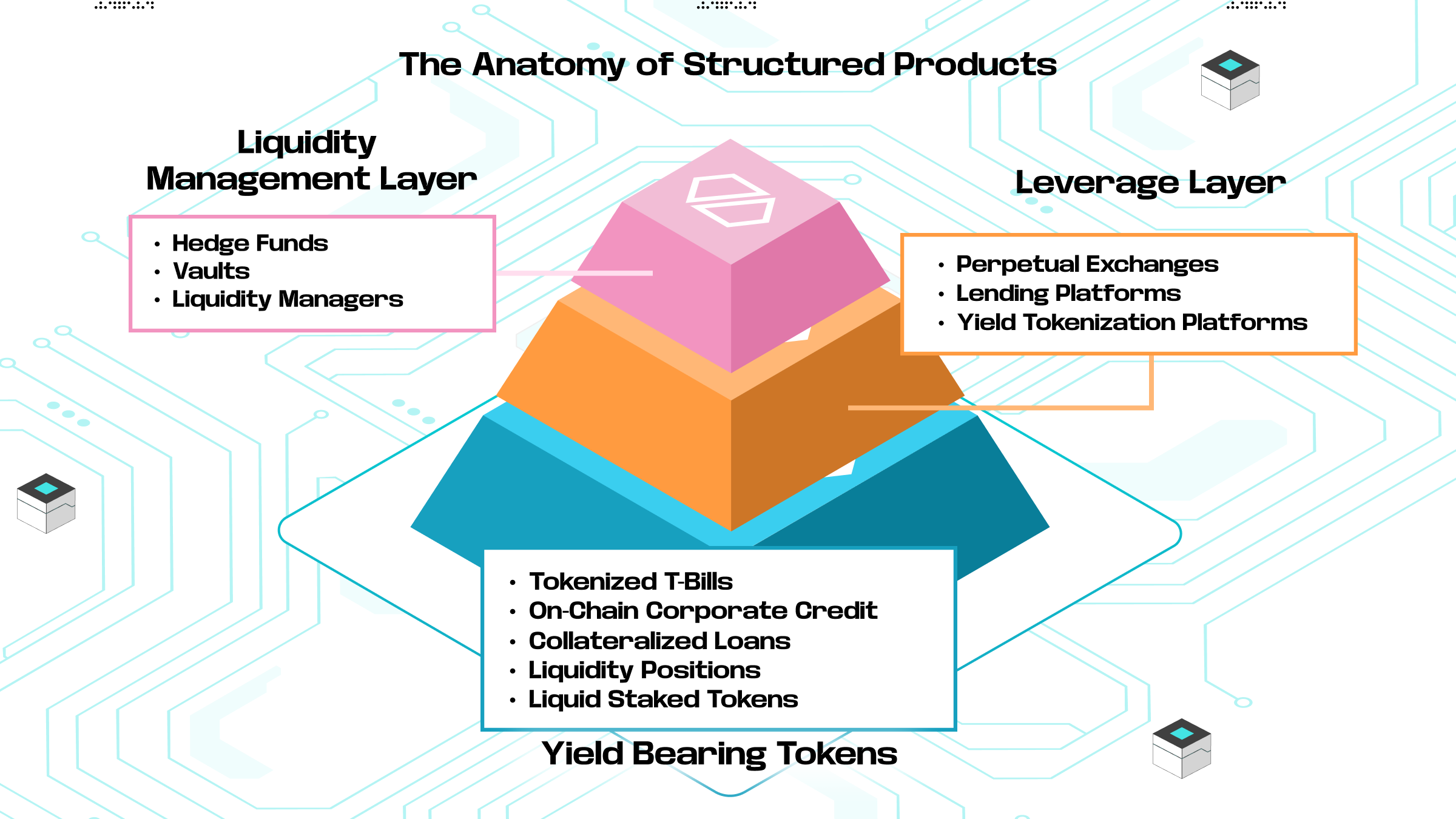
At the foundation of this system are yield-bearing assets and value-accrual tokens, collectively referred to as structured products. These include:
-
Real World Assets (RWAs):
Tokenized T-bills and on-chain corporate credit.
-
Crypto-native assets:
Such as Liquidity Provisioning (LP) tokens and collateralized loans.
These assets generate secure, steadily appreciating value that supports the next layer: leverage.
The Leverage Layer: Lending and Speculation
The middle layer consists of products like perpetual swaps (perps), lending platforms, and Principal/Token (PT/YT) platforms. Here, users can:
- Principal Tokens (PTs): Users can secure fixed yields by locking up their tokens.
- Yield Tokens (YTs): These allow users to speculate on yield volatility.
- Leverage: Users can amplify or “leverage” their yield by borrowing against their yield-bearing collateral to further increase their exposure to yield-bearing assets.
For example, opening debt positions in lending platforms increases liquidity utilization in other decentralized exchanges (DEXs), while leverage multiplies TVL. By using this leverage lending, users can maximize the potential yields of their positions, driving up the TVL in the ecosystem. These activities strengthen the base layer by reinforcing the utility and demand for yield-bearing assets.
The Liquidity Management Layer
Building on top the Middle Layer and Base Layer sits the liquidity management layer, including hedge funds, vaults, and liquidity managers. These entities accept user deposits, distribute funds across the ecosystem, and accelerate activity at the base and middle layers.
This cycle completes as LP tokens from vaults themselves become part of the base layer, contributing to the ecosystem’s growth and value accrual. Let’s illustrate this with a concrete example.
Example: Maximizing Yield in DeFi using GMX

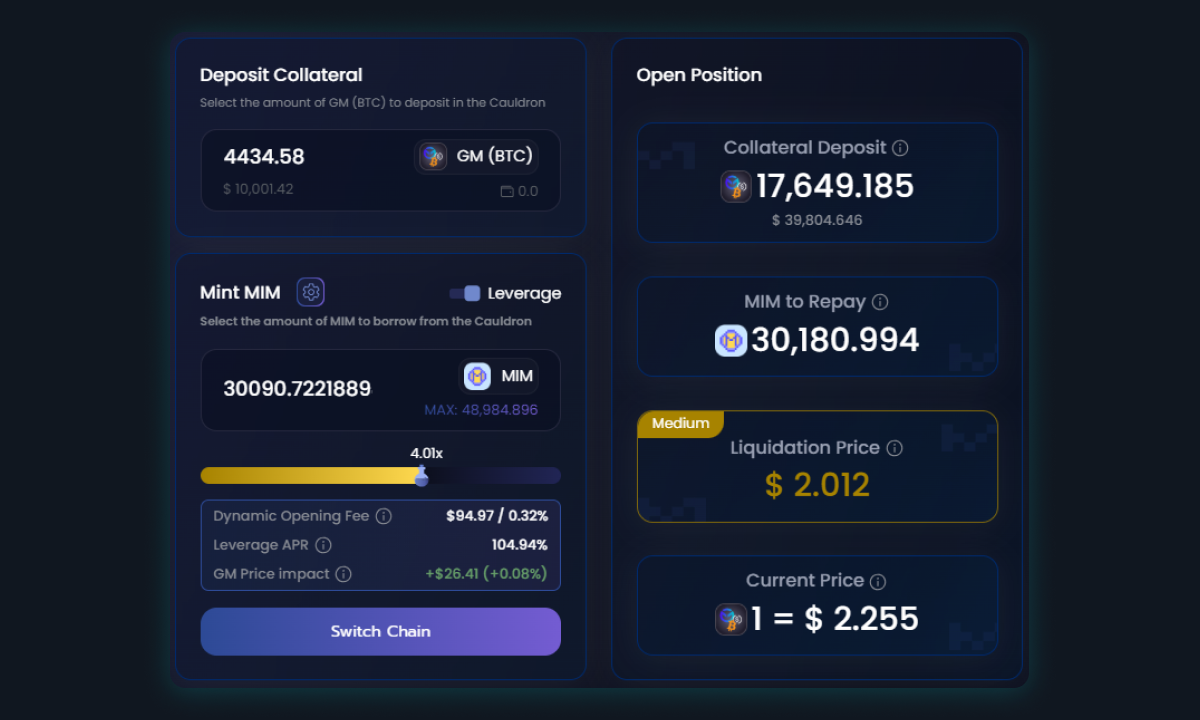
A user with $10,000 seeks maximum Bitcoin yield exposure. Here’s how the process works:
-
Deposit Funds:
The user deposits into the BTC/USD pool and receives GM BTC/USD GLPs, which yield 27.35% (as of Jan 10).
-
Leverage the Position:
The user leverages their GLP position via a leverage platform, gaining exposure to ~$40,000 worth of GLP at a 105% yield.
-
Profitable Strategy:
The GLP yields 27%, while leverage costs 8%, creating a 19% profit per leverage multiplier. With 4x leverage, the total yield is ~105%.
The benefits extend beyond the user:
- GMX receives $30,000 in additional liquidity.
- The leverage platform generates $2,400 in annual revenue.
- The DEX earns ~$300 in transaction fees.
This $10,000 position generates ~$43,000 in additional ecosystem value while creating real revenue for all participants, all without relying on token incentives.
The Flywheel Effect
Now, let’s zoom out. The interconnected nature of these structured product layers creates a flywheel effect.
As liquidity managers and vaults rebalance their positions, they drive up transaction volume, fees, and yields across the ecosystem. This not only sustains growth but accelerates it. By fostering organic revenue motes, these kinds of applications avoid an over-reliance on token incentives that would attract mercenary capital or mask products lacking product-market fit. This makes the system more resilient and sustainable.
At Nibiru, we build with this philosophy at the core. “Real” yield underpins almost every conversation we have with DeFi partners. By aligning structured products, leverage, and liquidity management, we enable builders to create real value for users and ecosystems alike.
If you're building anywhere in this value chain, Nibiru would love to collaborate! Ecosystem and Partner Contact Form - Nibiru.
Get Involved
Interested in bringing your vision to Nibiru’s community? Whether it’s a token, memecoin, NFT collection, or hosting an event, we’ve got you covered. No tech skills? No problem. Just bring your passion. Check out the Request for Culture [RFC] page for more info.