#80 | Nibiru’s Path to a $500B Bitcoin DeFi Opportunity
· 4 min read
Introduction: Bitcoin’s Resurgence
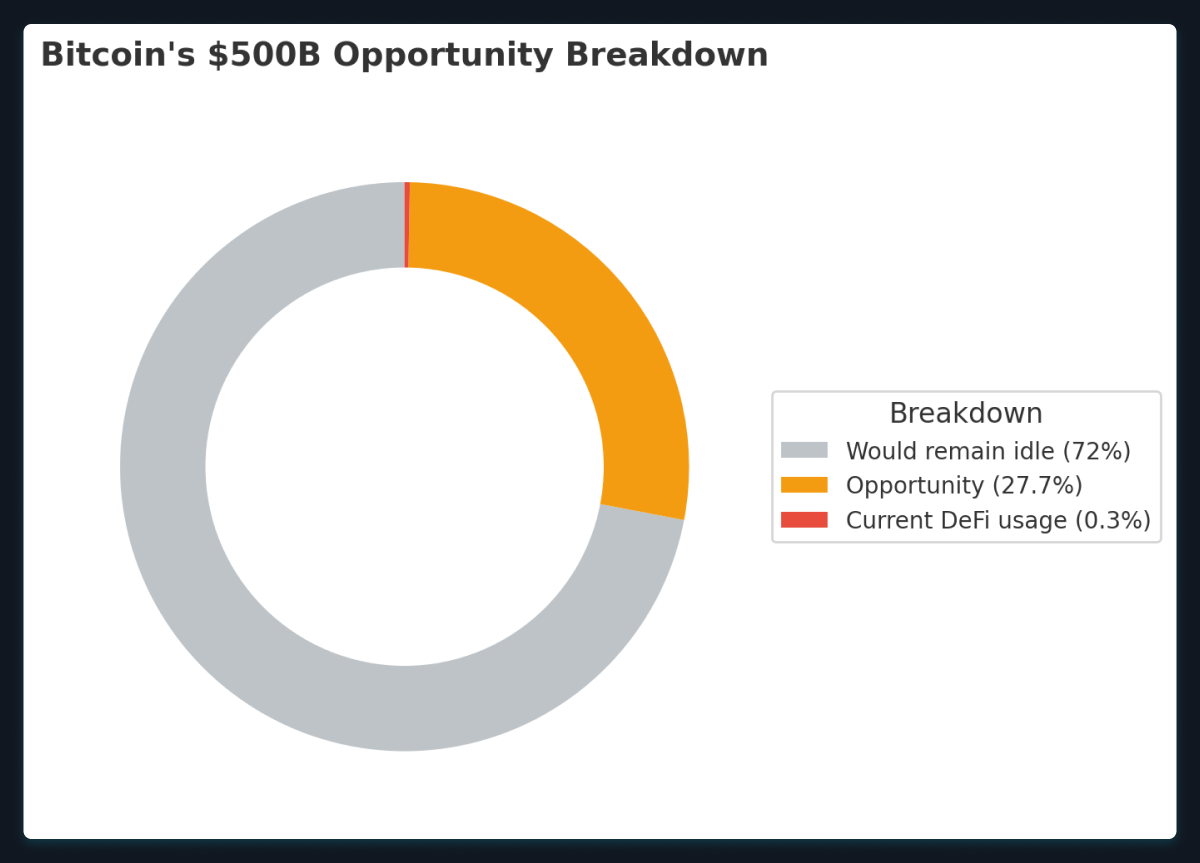
Bitcoin has reasserted itself in the current macro. Investors increasingly view Bitcoin as “digital gold” with record inflows into Bitcoin exchange-traded funds (ETF) since their launch in early 2024. Yet, the vast majority of BTC remains idle in wallets and unproductive. This points to a untapped opportunity in putting liquidity to work. Unlocking even a fraction of Bitcoin’s liquidity could have a significant impact. With over 28% of ETH staked on Ethereum, compared to only 0.3% of Bitcoin in staking, growth in Bitcoin’s on-chain usage represents a ~$500 billion opportunity.
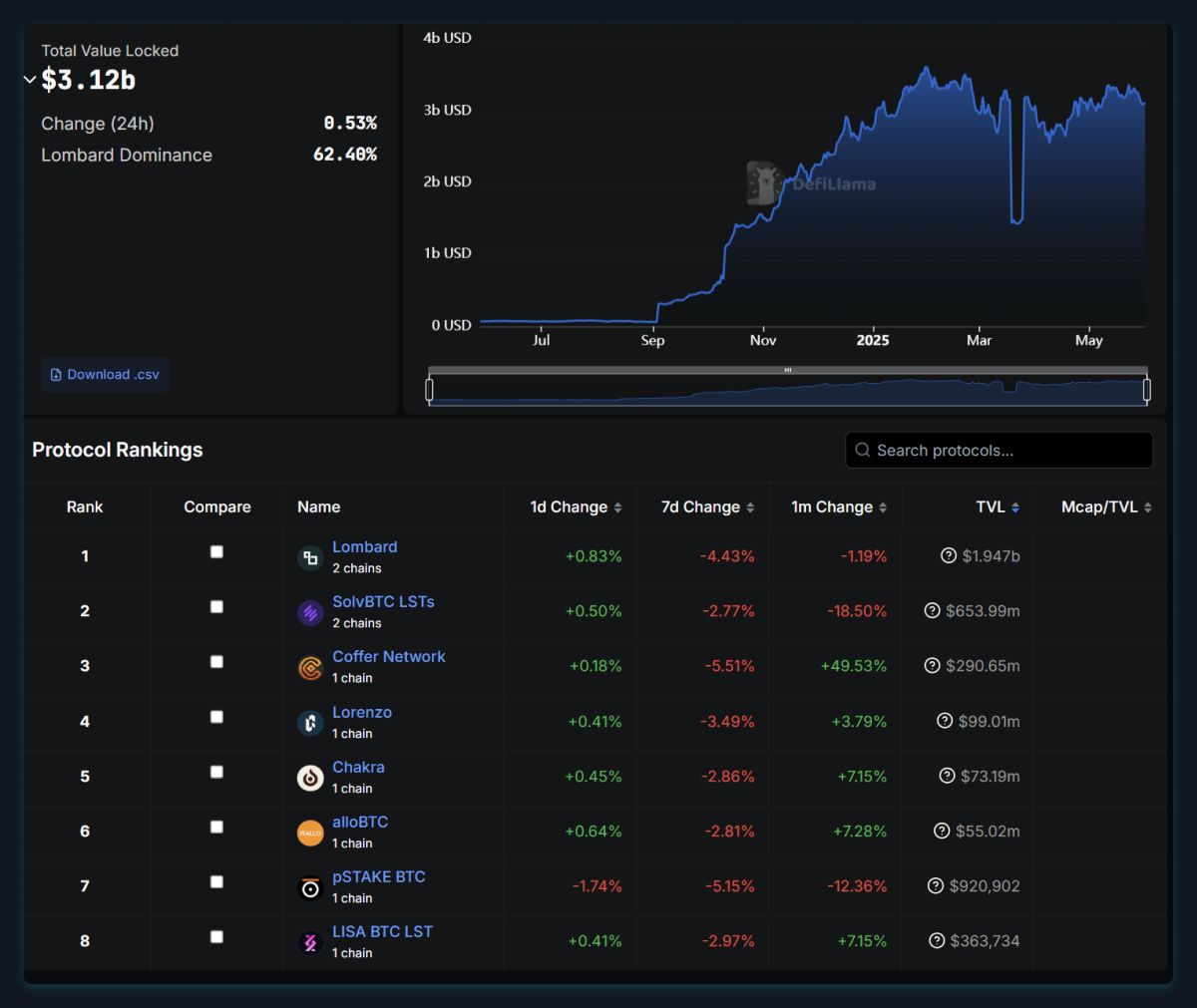
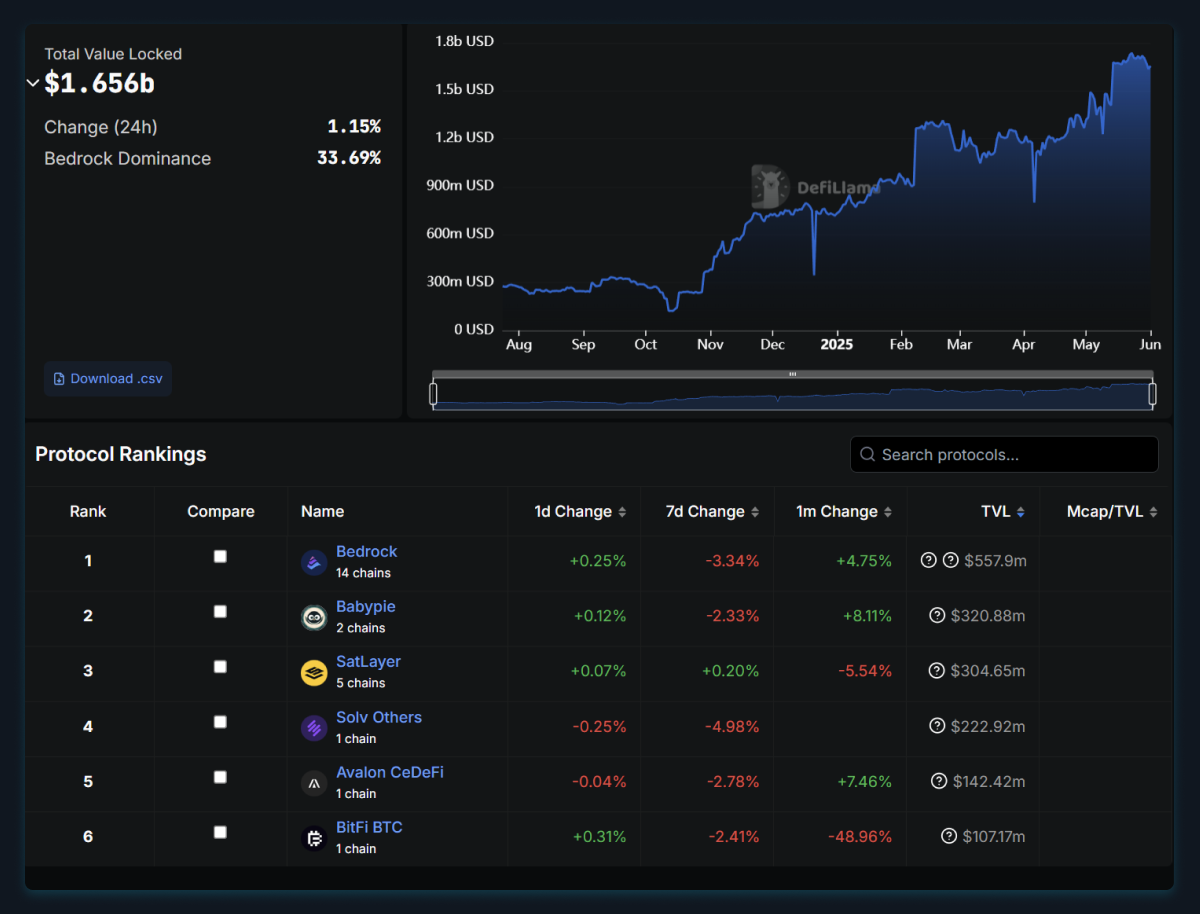
Bitcoin’s on-chain DeFi presence hit an all-time high of $7.48 billion in TVL by late 2024, driven by new BTC-focused protocols like yield-bearing BTC derivatives. Much of this value flowed into restaking protocols like Babylon and Lombard, which use BTC deposits to secure networks or issue yield-bearing BTC derivatives.
In this post, we examine how Bitcoin is being integrated into Layer 1 and Layer 2 networks, its role within DeFi, the race for its liquidity, and how Nibiru’s Bima and B² initiatives plan to capture substantial BTC-based TVL.
Onboarding Bitcoin to third-party Layer-1 and Layer-2 Platforms
Layer-1 and Layer-2 platforms are vying to onboard Bitcoin liquidity via decentralized BTC tokens instead of centralized wrappers like WBTC.
- In Oct 2024, Stacks introduced sBTC to move bitcoin trust-minimized between Bitcoin L1 and Stacks L2.
- In May 2025, Sui bridged in sBTC, letting users mint on Stacks and deploy on Sui for dual yields (5% BTC rewards plus DeFi incentives), now over 10% of its TVL.
- That same month, Starknet partnered with Lombard Protocol to launch LBTC: BTC staked via Babylon and issued on Starknet so holders earn staking rewards without relinquishing custody.
At the forefront of this movement, Nibiru will unlock Bitcoin liquidity through strategic integrations with BIMA, B² Network, and MIMSwap. By tapping into these partnerships, Nibiru users will be able to earn yield and borrow against their decentralized BTC tokens.
Introducing Bitcoin-Backed Finance: Stablecoins, Stableswap Pools, and Yield
The term BTCFi (Bitcoin Finance) captures the growing suite of DeFi tools that bring Bitcoin’s liquidity into Layer-1 and Layer-2 ecosystems, enable BTC-collateralized stablecoins, facilitate low-slippage swaps, and unlock new yield opportunities.
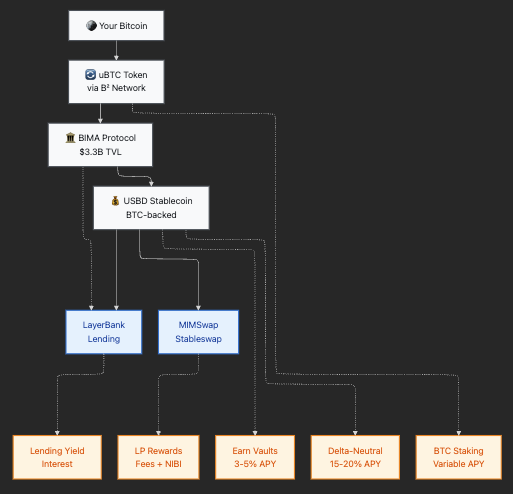
Bridging Tokenized Bitcoin Liquidity into DeFi
Since Bitcoin’s native blockchain doesn’t support smart contracts, a variety of tokenized Bitcoin assets have emerged, from custodial ERC-20 tokens like WBTC, to trust-minimized synthetics such as sBTC or tBTC, and multi-chain wrapped versions like uBTC that mint 1:1 backed tokens across EVM-compatible networks.
Nibiru will onboard BTC by partnering with B² Network: using Hyperlane, a secure, permissionless cross-chain messaging and asset-transfer protocol. B² custodies real BTC and issues uBTC bridgeable to Nibiru, enabling seamless integration into its DeFi suite.
Minting BTC-Collateralized Stablecoins
BTC holders can mint USD-pegged stablecoins without selling their collateral, much like borrowing DAI against ETH on MakerDAO. On Nibiru, BIMA enables users to lock BTC to mint USBD, an over-collateralized, BTC-backed stablecoin. USBD can be deployed into BIMA vaults—ranging from a passive “Earn” strategy yielding 3–5% APY to delta-neutral vaults targeting 15–20% APY.
Forming “Stableswap” Liquidity Pools
DeFi platforms such as MIMSwap are launching stableswap pools to facilitate low-slippage trading among stablecoins. For example, a USBD/USDC pool lets USDC holders convert into USBD that can earn yield in BIMA vaults.
Yield Generation for BTC Holders
Bitcoin holders have a range of on-chain strategies to earn yield:
Staking Yields: BIMA allows users to lock BTC, via smart contracts or federated signers, to secure partner proof-of-stake networks while retaining custody. Rewards, paid in BTC or the network’s native token, are automatically credited. Yields vary by network, from low single digits to double-digit APYs. Avalon Finance’s sUSDa offers up to 10% APY for Nibiru users.
Lending and Borrowing: By tokenizing BTC on platforms like Ethereum, Arbitrum, or Nibiru, holders can lend their BTC or BTC-denominated assets on money-market protocols to earn interest, or use BTC as collateral to borrow stablecoins and pursue leveraged strategies. For example, on LayerBank on Nibiru, users can deposit uBTC as collateral to earn interest from borrowers or borrow USD-pegged or other assets against their uBTC.
Yield Farming & Liquidity Provision: On Nibiru, stableswap pools feature USDB/USDC pairs for low-slippage stablecoin trading, while concentrated-liquidity pools on Oku handle uBTC/WNIBI pairs to facilitate BTC and USBD related swaps swaps. Liquidity providers earn a share of trading fees and often receive NIBI tokens (or other native incentives) when new pools launch. Beyond simple LP’ing, Nibiru’s structured vaults can auto-compound LP rewards or deploy them into delta-neutral strategies, maximizing BTC-denominated yields.
Conclusion: A New Era of BTC Integration
Bitcoin’s growing institutional prominence has created incentives to weave BTC into DeFi. Across various blockchain networks, Nibiru included, projects are wrapping, staking, lending, and integrating Bitcoin. For crypto-native users, this means combining Bitcoin’s liquidity with Ethereum-style smart-contract innovation and cross-chain interoperability, unlocking a more interconnected ecosystem.
This shift reframes Bitcoin from “locked digital gold” to productive capital fueling yield farms, stablecoins, and novel primitives. Protocols that secure BTC liquidity benefit from additional collateral and a loyal user base, while BTC holders gain opportunities to earn yield without surrendering Bitcoin’s upside. As the race for on-chain Bitcoin TVL continues into 2025, institutional adoption and concerns about fiat currency debasement will only heighten interest in these integrations.
However, it’s crucial to keep potential security considerations in mind when working with tokenized BTC: whether wrapped BTC tokens, liquid staking derivatives, or cross-chain bridges. Smart-contract vulnerabilities, bridge exploits, and peg risks can expose users to loss of funds or unintended slippage. Rigorous audits, decentralized multisig governance, and ongoing protocol monitoring should be prioritized to mitigate these attack vectors.
Nibiru is closely tracking these developments and is well positioned to take advantage of the roughly $500 billion on-chain Bitcoin opportunity.
Sources:
- CME Group – “Ethereum’s Turn: Staking Yields and Market Dynamics” (2025)
- Coinbase – Bitcoin Staking Statistics
- Notion – BTC-backed Finance in Nibiru (TVL Data)
- GlobeNewswire – BIMA Launches Mainnet for Bitcoin-Backed Yield Generation (Apr 9, 2025)
- Sui Blog – “sBTC & Stacks Integration for BTCFi on Sui” (May 2025)
- Starknet Foundation – “Lombard Brings Bitcoin to Starknet via LBTC Integration” (May 2025)
- Stacks – “Nakamoto Is Here” Upgrade Announcement (Oct 2024)
- Money On Chain – “DOC Decentralized Bitcoin-Backed Stablecoin on RSK”
- Sovryn Wiki – “Zero Protocol for 0% Interest Loans”
- DeFi Llama – Babylon Protocol TVL
- DeFi Llama – Lombard Finance TVL
- Polkadot – Interlay Launches Landmark Trustless Bitcoin Bridge on Polkadot (Aug 2022)
- Binance – Wrapped Bitcoin (BTCB) on BNB Smart Chain (Nov 2020)
- Binance – Bitcoin Staking via Babylon Protocol on Binance Earn (Dec 2024)
- Threshold Network – “Bitcoin Gets Based: Native tBTC Minting on Base” (Mar 2025)
- BIMA Docs – Institutional-Grade Vault Strategies for USBD+ (15–20% APY)