#14 | Web3 Super App: What it Takes for Mainstream Adoption
· 4 min read
The promise of blockchain is a world without middlemen.
Introduction: Promise of Blockchain
For many, Web3 isn't simply another buzzword or trend; it's the natural next step in our digital evolution. A step that, rather than merely digitizing the physical world, catapults us into an era of heightened efficiency and transparency. The decentralized web is more than just a technology. It’s a catalyst for change—a transformative force with the potential to reshape our digital landscape.
At the forefront of this march towards the future are the proponents of blockchain technology and Web3, all of whom share a collective dream: to actualize the transformative potential of smart contracts and decentralized consensus.
Smart contracts are computer programs that automatically execute and enforce the terms of an agreement once certain conditions are met. The logic written into the these contracts dictates their behavior, eliminating any ambiguity that might exist with traditional contract terms, bolstering tamper resistance, and ensuring that contractual obligations are carried out fairly and automatically.
Decentralized consensus, on the other hand, allows for a democratized validation of transactions. By distributing transaction validation across multiple nodes in a network, it ensures system integrity and helps prevent any single point of failure or control.
Together, these innovations offer a novel approach that holds the promise to revolutionize industries. They pave the way for the automation of tasks in a completely on-chain environment.
Imagine supply chains where goods are tracked transparently, financial systems where payments are made without intermediaries, or social networks where users own their data.
Companies can streamline their operations, reducing the time and cost associated with manual processes. Consumers benefit from lower prices, faster service, and increased trust.
Take, for instance, the typical operations of credit card networks. They usually impose interchange fees between 1-3% to compensate for authorization expenditures, losses due to fraud, and funding expenses, among others. Once these fees are repeatedly applied throughout a multi-step supply chain, they inevitably begin to compound.
This is where blockchain technology steps in, acting as a catalyst for an impending financial paradigm shift. It has the potential to reinvent established financial procedures by streamlining steps within the credit card processing cycle and increasing economic efficiency.
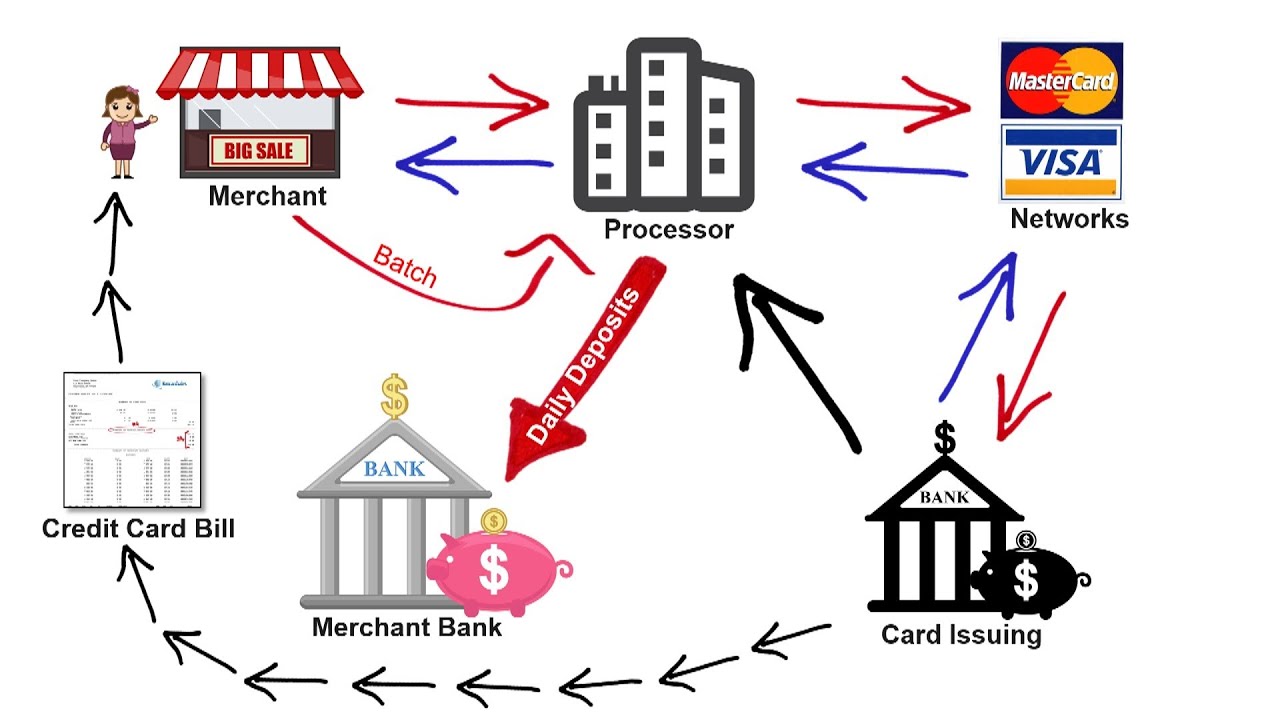
This consequent surge in efficiency triggers substantial cost reductions, as epitomized by platforms like Solana Pay that levies an average transaction fee of a mere $0.0005.
To put this in perspective, consider the average U.S. credit card transaction, which Visa reports to be $66. This means that the transaction fees of Solana Pay equate to less than 0.001% of the average credit card transaction in the U.S.
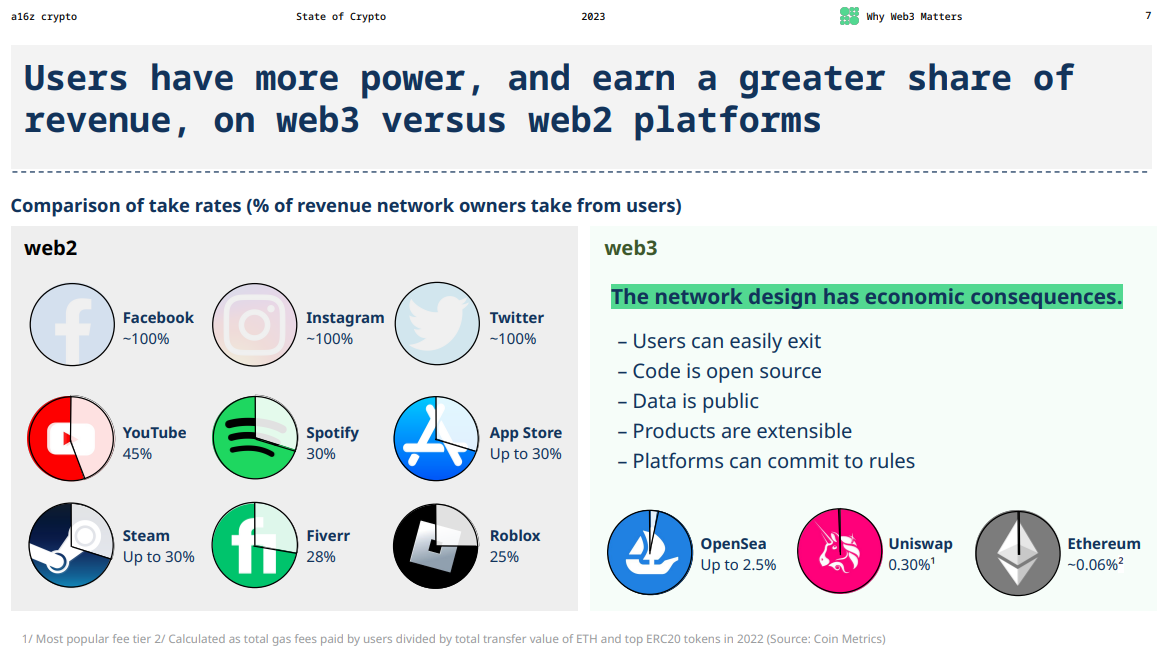
In stark contrast to major Web2 platforms that can command take rates ranging from 25% to 100% of user-generated revenue, Web3 platforms exhibit an entirely different landscape. Platforms like OpenSea, Uniswap, and Ethereum remarkably lower the barrier with take-rates of 2.5%, 0.3%, and approximately ~0.06% respectively.
The Imperative for Transparency and Accountability
“Consumers are learning very hard lessons about the risks of centralization. You can draw a straight historical line from Mt. Gox to Voyager Digital, Celsius Network and now FTX. The inevitable conclusion is that centralized entities pose a systemic risk to the crypto ecosystem. It is well past time that we as a collective crypto community come together to demand better.” - CoinDesk
However, despite crypto’s potential, there is still a dire need for transparency and accountability. The collapse of centralized exchanges and platforms like Celsius, Voyager, and FTX have highlighted the inherent opacity and associated risks of placing trust in a centralized party.
Centralized exchanges and brokers frequently co-mingled customer funds, relegating customers to the position of unsecured creditors. What follows are three CeFi examples illustrating this need for transparency and accountability.
Celsius Network
The collapse of Celsius Network, a prominent crypto lending platform, in 2022 was precipitated by liquidity constraints and trading mishaps. The CEO disclosed a staggering loss of $200 million in May 2022, while a former employee leveled accusations of fraudulent conduct at the company. The company's questionable business practices even drew the scrutiny of the New York Attorney General's office.
By July 2022, the company faced severe financial strain, with users battling to withdraw their funds. The final blow was dealt when Celsius Network declared insolvency on July 13, 2022, attributing it to "substantial operational losses" and "continuing regulatory challenges.”
Voyager
Voyager, a cryptocurrency broker, offered trading and yield-earning services to its clientele, but its hasty expansion and absence of transparency raised doubts about its financial solidity. Voyager had been operating much like a bank, utilizing customer funds for high-risk investments that disastrously misfired during a market downturn. Despite efforts to reorient the business and secure extra funding, Voyager's liabilities only grew, culminating in its eventual bankruptcy.
FTX
FTX, as a centralized platform, had heightened susceptibility to security breaches, technical glitches, and possible mismanagement. The centralized architecture of the exchange rendered it an enticing target for cybercriminals and malevolent parties.
It also meant users were compelled to depend on the exchange's security measures and decision-making, rather than maintaining absolute control of their assets. This excessive dependence on a single organization amplified the risk exposure for both the platform and its users, which ultimately led to its downfall.
How DeFi is Revolutionizing the Game
The adage "not your keys, not your crypto" encapsulates the notion that the only way to truly secure crypto holdings is to store them in a wallet where one has personal key access. Simply put, there's an underlying distrust towards centralized entities managing your crypto on your behalf.
“It is mind-boggling how often just one person’s actions can impact the fortunes of millions. This is the exact opposite of how crypto is supposed to work and why the centralization era has been so risky. This era must come to an end. The era of decentralization is the only viable path forward. Crypto must return to its roots and take back power from corrupt institutions that have abused their power and influence… A properly implemented and maintained decentralized finance (DeFi) economy will service the interest of both customers and operators, not to mention provide encoded consumer protections which regulators are trying to achieve.” - CoinDesk
The utilization of a public, immutable ledger of transactions through blockchain lends unparalleled transparency to the actions of communities and applications.
While the equivalent data for decentralized exchanges is inherently present on-chain, established centralized exchanges like Binance are obligated to provide a Proof of Reserves.
Yet, the current state of blockchain and DeFi poses substantial barriers to entry for both newcomers and seasoned experts. The impending challenge for the crypto industry lies in refining the usability and scalability of these systems.
The Problem: Fragmentation and Complexity
The crypto domain suffers from fragmentation in its application set, with each application nestled within its unique ecosystem. Such fragmentation is a natural byproduct of the developmental trajectory of a diverse set of builders. While this diversity has spurred a rapid pace of innovation, it has also given rise to an unnecessarily complex environment.
Often, teams develop applications in silo, without a coordinating body that would oversee their integration in the broader ecosystem. This gives rise to obstacles for users attempting to employ multiple apps easily.
It is much like a city where houses are erected without proper planning or infrastructure. In such a city, inhabitants would eventually experience difficulties from the lack of roads, bridges, hospitals, education, utilities, and general support. In turn, the city’s growth would eventually stifle.
The gateway to widespread adoption hinges on enhancing the usability and scalability of these systems. Ensuring Web3's accessibility to the broader populace is the crucial next step on this journey.
The Path from Complexity to Simplicity
To propel the next phase of adoption, the crypto industry's priority must be simplifying the user experience and extending accessibility to a wider audience. This process entails integrating the myriad applications and platforms into a streamlined, unified experience. We champion a shift towards simplicity, embracing the 'Super App' concept proposed in Republic Crypto's "Super Token Thesis".
Unleashing Super Apps: Igniting Usability and Adoption
Apple's inaugural 1977 marketing brochure introduced a timeless adage that sums it up aptly, "Simplicity is the ultimate sophistication":
“not merely the shallow simplicity that comes from an uncluttered look and feel and surface of a product, but the deep simplicity that comes from knowing the essence of every product, the complexities of its engineering and the function of every component.” - Smithsonian
The advent of "Super Apps" has revolutionized the way we interact in the Web2 world. These applications, combining seemingly separate services into one interface, serve as the operating systems for our everyday lives. Super Apps provide a needed convenience in user experience.
“Imagine a single app that allows you to shop for groceries, pay your rent, review work documents, refill prescriptions, book a trip, and chat with friends, interest groups, and businesses — that’s a super app. Sounds more like your entire iPhone than one app, right? That’s because it essentially is. True super apps are more akin to an operating system than any Western app, with the bonus ability to share fun selfies with your friends.” - a16z
The Hunt for the Web3 Super App Continues
The closest experience currently available resides in centralized exchanges like Binance. These CEXs offer an array of advanced trading features such as margin trading, futures, options, and stop-loss orders, all under the umbrella of user-friendly interfaces, fiat on-ramps, and vast liquidity.
However, it is important to note that CEXs carry their own set of disadvantages including potential security threats, compromised privacy, the introduction of middlemen, and centralized points of failure as evidenced in the downfall of Celsius, Voyager, and FTX.
DeFi Trinity: Early Innings of the Web3 Super App
The DeFi Trinity creates a self-reliant financial ecosystem offering a variety of financial services without centralized intermediaries. Essentially, it is the earning innings of a DeFi Super App, founded on three pillars: Decentralized Exchange (DEX), stablecoin, and lending platforms.
The DeFi Trinity is the closest embodiment of a Web3 Super App, incorporating three key DeFi primitives. Additional primitives include liquid staking, yield, derivatives, synthetics, indexes, and payments.
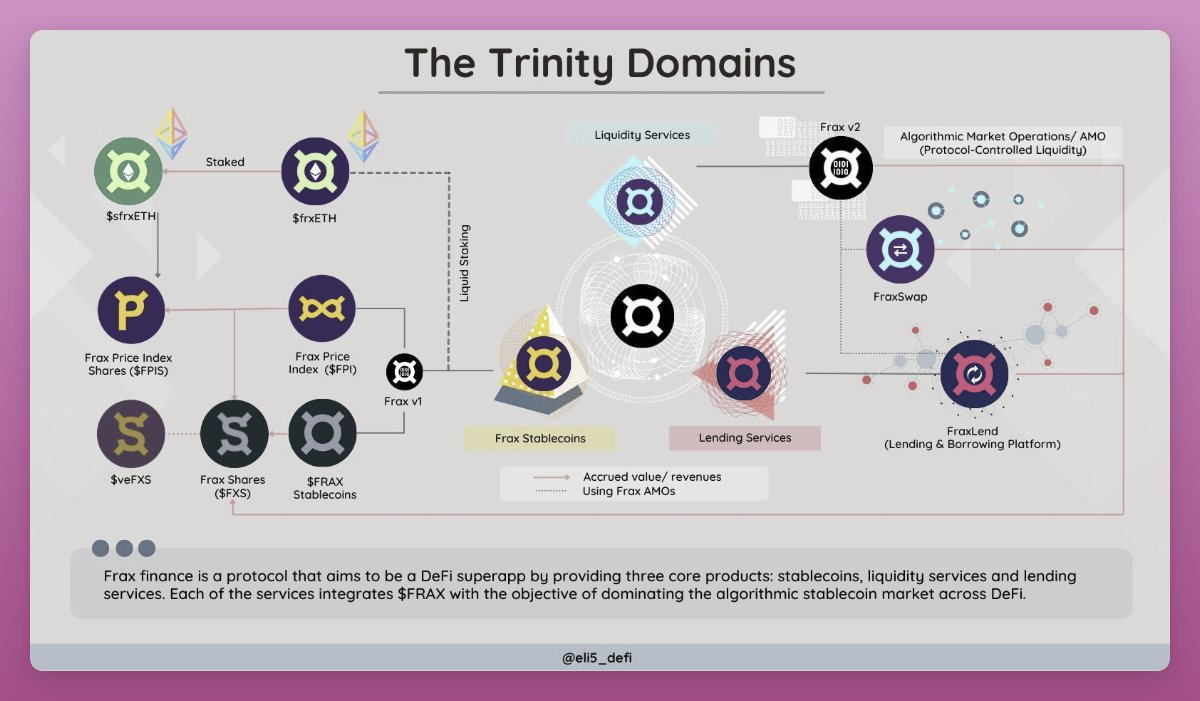
While Aave and Curve have launched their native stablecoins (GHO and crvUSD), Frax Finance is a prime complement to the DeFi Trinity, offering its Fraxswap, Fraxlend, and FRAX stablecoin products. With full control over its stack, Frax augments its capacity to implement monetary policies to bolster its stablecoin.
“An all-in-one app. You’re using an equivalent of Aave + Uniswap + DAI in the same platform with some tweaks. That’s pretty awesome and it’s a decisive path to adoption because the first moves of a new defi user will be greatly simplified by using the Frax app.”- Daesu
Frax’s vision is attractive given its streamlined user experience and the interplay of its three primitives. A novice user isn't burdened with navigating multiple user interfaces and communities upon onboarding. This coordinated ecosystem emulates efficient urban planning and fosters greater public utility. Frax’s path will lay the groundwork for future DeFi Super Apps.
It's evident that proven DeFi applications are broadening their product portfolios to encompass additional primitives once they've achieved product-market fit in their core verticals. In other words, robust and entrenched protocols will likely venture beyond their primary areas of expertise to tap into wider market segments.
Taking a step back, both the Super Token and the DeFi Trinity signify an increasing trend towards assimilating increasingly diverse applications in a simplified, user-friendly manner.
Unveiling Nibiru: The Missing Piece in the Web3 Super App Puzzle
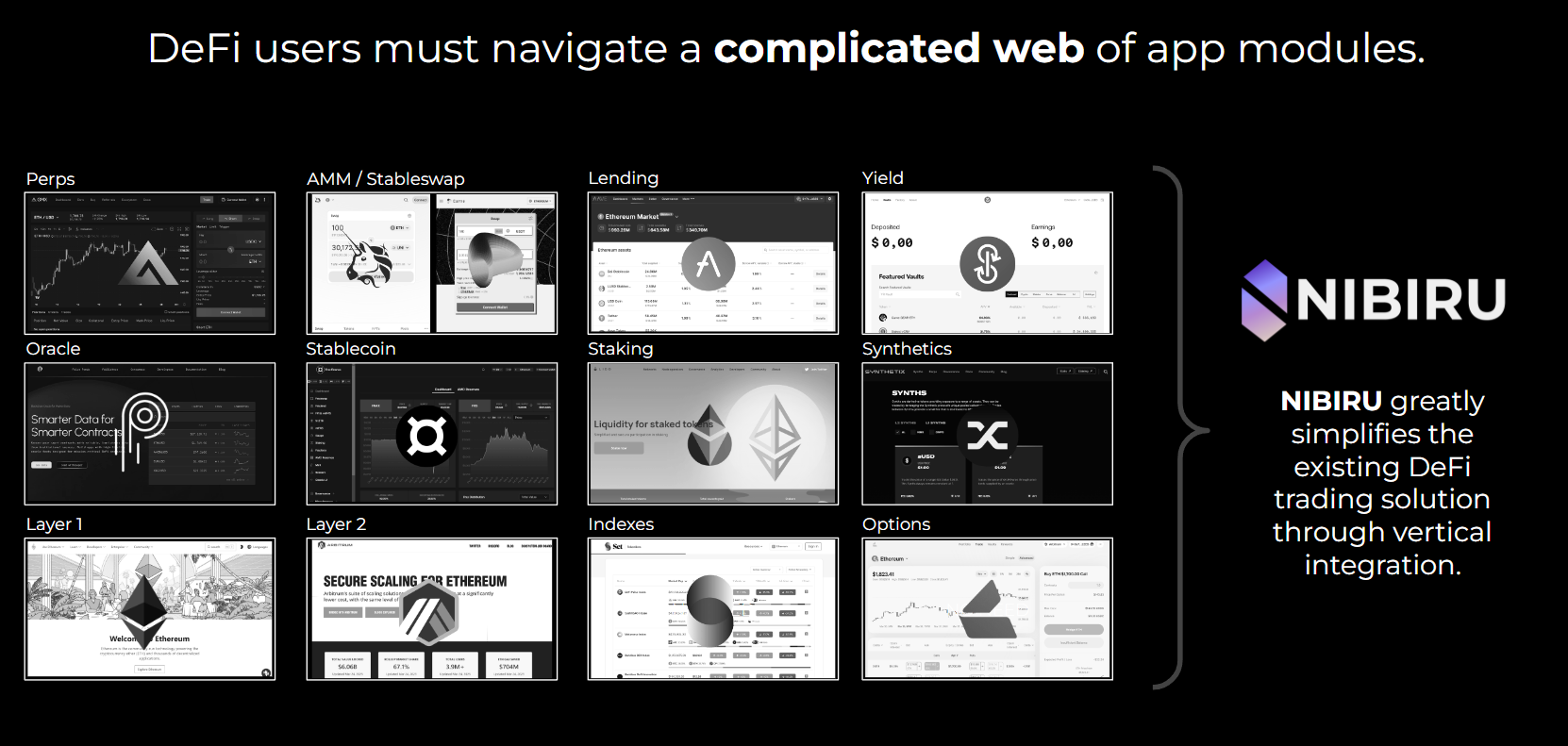
As highlighted earlier, the lack of a Web3 Super App in the current landscape contributes to persistent fragmentation and complexity within DeFi. Nibiru aims to address this issue, offering a suite of core applications natively incorporated within its Layer 1 blockchain. Nibiru's mission is to streamline the existing trading solutions, filling a pressing market demand.
“Nibiru aims to build the next-generation DeFi hub, seamlessly integrating leveraged derivatives trading, spot trading, staking, and bonded liquidity provision with a user experience akin to centralized exchanges. DeFi users want a secure, transparent and self-custodial trading hub and Nibiru is an obvious choice. We are proud to be part of Nibiru's journey to disrupt this space.” - NGC Ventures
The Nibiru Core App Suite
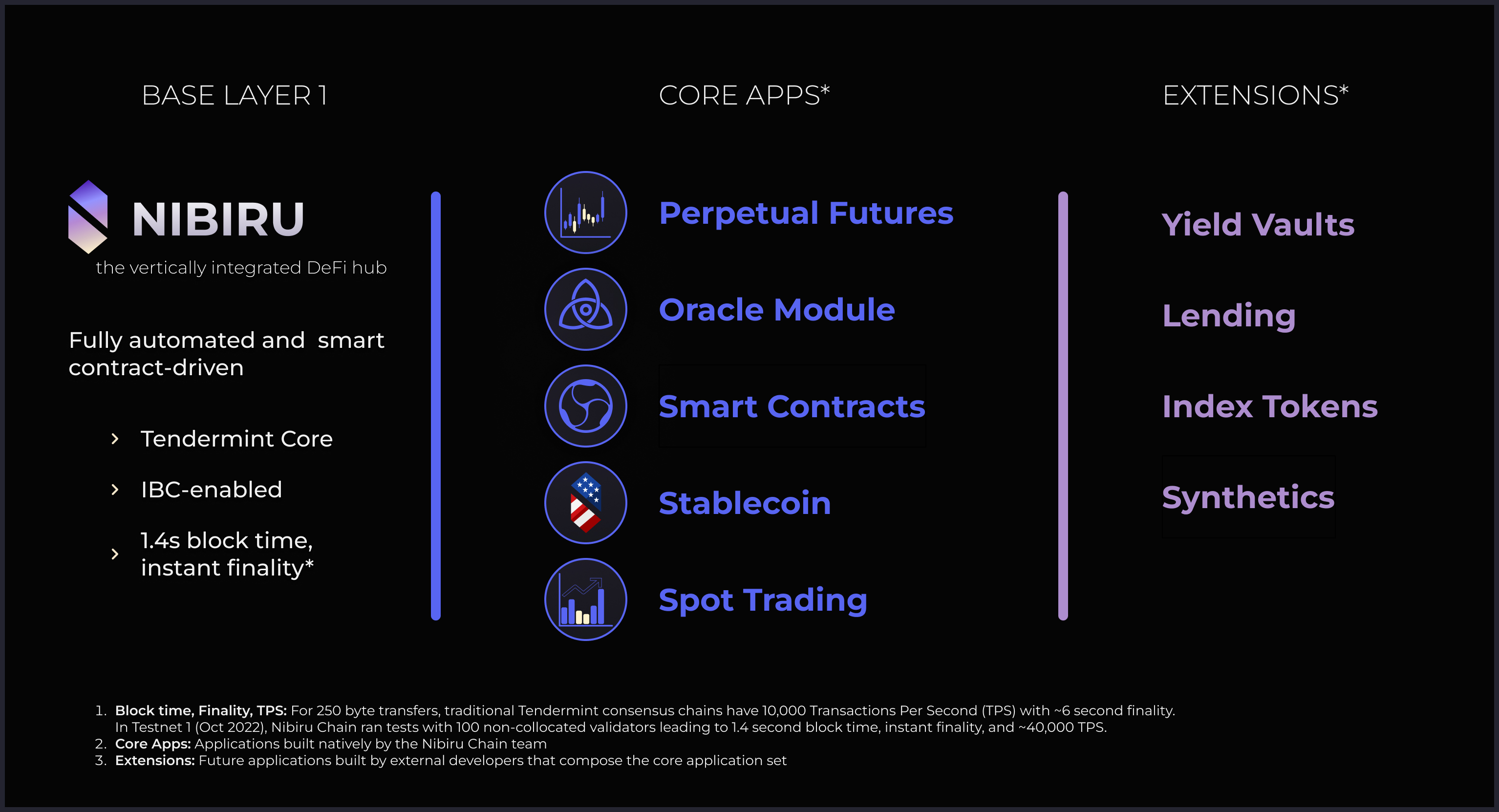
Nibiru's arsenal of vertically integrated DeFi primitives will comprise:
- Sai: A perpetual futures exchange enabling users to trade a wide array of assets non-custodially, on-chain, with minimized gas fees.
- Oracle Module: Nibiru utilizes a native system of decentralized oracles for accurate asset pricing and communicates with other Cosmos layer-1 chains via the Inter-Blockchain Communication (IBC) protocol.
- CosmWasm Smart Contracts: Built for the Cosmos Ecosystem, the CosmWasm framework mitigates most risk vectors associated with Solidity smart contract development, enhancing Nibiru's security and performance.
- Nibi-Swap: An automated liquidity protocol for spot trading multichain assets, negating the need for trusted intermediaries. It facilitates swaps, pools, and bonded liquidity gauges, including speculative and stable swap pools.
Core Apps: Laying the Foundation for Future Applications
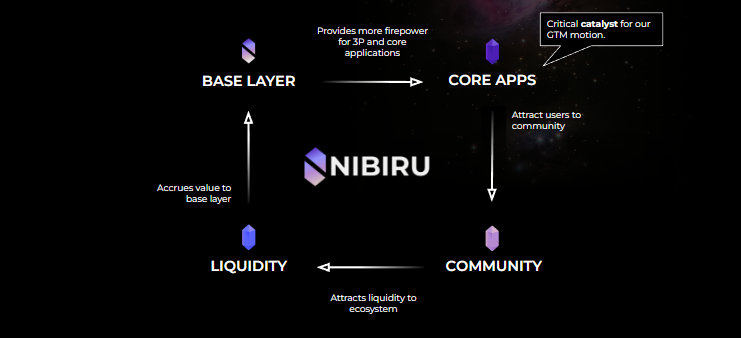
This suite of core apps will form the cornerstone of a DeFi Super App, while also catalyzing the momentum for an ecosystem development flywheel.
The ecosystem flywheel operates on a cycle: Core applications serve as magnets, drawing users into a community. These users, in turn, infuse the system with liquidity as active participants. The addition of liquidity propels the base layer 1, providing it with greater opportunities to generate revenue and accumulate value. The enhanced value of the base layer then fuels both 3rd party and core applications, giving the ecosystem more leverage to operate and grow.
Unlike traditional Layer 1s that merely build blockchain infrastructure and expect various application teams to integrate on top, Nibiru encourages external developers to create applications in tandem with a well-integrated core application suite.
For developers, integrating with Nibiru should feel as natural as constructing a house on a pre-planned plot with all necessary infrastructure and services already in place.
The Rationale Behind Building Nibiru
To summarize, Nibiru seeks to counteract the pervasive application fragmentation that has hampered the speed of new user integration into Web3. By establishing a single destination for DeFi primitives, Nibiru enhances the user experience, consolidating a diverse range of applications into a unified Web3 "Super App" platform.
Join the Journey
The strength of Nibiru to date lies in its burgeoning developer community, as evidenced by the +30K smart contracts deployed and +80K eligible validator nodes on testnet. We invite builders to immerse themselves within the Nibiru ecosystem, contributing to our mission of making crypto as uncomplicated and accessible as possible.

Build on Nibiru - The team eagerly awaits your participation.
🔮 Docs | 👾 Discord | 🐦 Twitter | 🔥 Web App | ⛓️ ️Explorer | 🌴 Link Tree | 👨💻 Code | 🎥 YouTube